
What red and green cards mean
A red-and-green card is a simple visual signal for a neighbor check-in, but its meaning comes from the people using it. Neighbour Check-In and Safety Guide is an independent information guide, not a shop or check-in service. Before relying on a color, agree what it communicates and what response it calls for. The same color can carry different meanings in different households or neighborhoods.
Agree what each colour means
Think of a window card as a brief visual check-in, not a message with a built-in definition. A red card might ask a neighbor to make contact, while a green one might signal that things are going well; those meanings apply only if the people involved have agreed on them.
Use plain language when deciding what each color says. For example, agree whether red means “please call me” or “I need help,” since those phrases imply different levels of response. Likewise, decide whether green means “I am well today” or simply “no check-in is requested.” Everyone who displays or reads the cards must share the same meanings for the neighbor check-in card system to work as intended. If a new participant joins, explain the agreed meanings to them rather than expecting them to infer them from the colors.
Possible meanings for each colour
Use examples like these to choose meanings that fit the people taking part. Each row pairs a possible message with the response it implies; the wording should be agreed locally.
| Colour | Possible agreed meaning | Implied response |
|---|---|---|
| Red | Please contact me today | Make the agreed contact that day |
| Red | I need help with a task | Contact the person to discuss the help requested |
| Green | All is well today | No extra contact is prompted by the card |
| Green | Routine check-in completed | Continue with the usual check-in arrangement |
These are examples, not required definitions: neither red nor green has a mandatory universal meaning. For one household, a red card may request a same-day call; another group may use it to ask for practical help. The card’s color alone cannot tell a neighbor which interpretation applies, so use the agreed wording consistently.
How to agree a card arrangement
A card arrangement works best when the neighbour taking part helps shape it, rather than having a signal chosen for them. Treat it as an informal communication method: it only works when someone notices the card and follows the agreed routine. Discuss the purpose, placement and response steps before relying on it for regular check-ins. A clear plan can prevent uncertainty about who should act or when. If a window card is unsuitable, agree another method that fits the person’s preferences and routine.
Discuss the idea together
Raise the idea in an ordinary conversation, not during a crisis or when the neighbour feels pressured. Explain simply that a visible card could be one part of a neighbour check-in card system, then ask whether they would like to try it. Make clear that taking part is optional and that they can change their mind.
Ask what they want the arrangement to communicate and when a check-in would be useful, such as on weekday mornings or during a planned period away from their usual routine. Listen to concerns about visitors, eyesight, mobility or having a card in the window. Agree together on the practical details before anyone else is asked to help, and check that the neighbour is comfortable with each person who may follow up.
Set the location and response plan
Agree the practical steps in advance, including where the card will be seen and who is responsible for responding. A short written note with the agreed routine can help prevent different neighbours from making different assumptions.
- Choose a suitable location: Pick a window or doorway that can be seen from the agreed approach, such as the shared entrance, without requiring anyone to enter the home.
- Make placement consistent: Agree which pane or spot to use and how the card should be positioned, so the checker knows where to look during each planned check.
- Define a response prompt: Set a specific trigger, such as a card not appearing by 10 a.m. on an agreed weekday, rather than relying on a vague impression.
- Name the lead checker: Choose one person who is usually available at the agreed time, and confirm how they can contact the neighbour if a follow-up is needed.
- Choose a backup: Ask a second trusted neighbour to cover holidays, illness or missed visits, and make sure both people know who is leading on a given day.
- Agree follow-up timing: Decide whether the checker should call first, wait for a reply for a set period such as 30 minutes, then use the agreed next step.
Keep the routine specific: record the check days, expected time, lead person, backup and follow-up method in one shared note. Review it with the neighbour if their schedule or preferred contact method changes.
Choose an alternative check-in
A window card is not right for everyone: a neighbour may not have a suitable window, may be away often or may simply prefer not to display one. Choose an alternative together and set a clear time and contact person.
- Agreed phone call: Set a regular time, such as 9 a.m. on weekdays, and decide whether the neighbour should call back if the checker reaches voicemail.
- Text or messaging app: Agree a brief check-in message and a response window, for example replying by lunchtime, so a missed message has a clear meaning.
- Scheduled visit: Arrange a doorstep visit on a chosen day and time, such as Monday morning, with the neighbour’s agreement on how the visitor should announce themselves.
- Trusted contact: Ask a relative, friend or nearby volunteer to make the agreed check-in, and confirm who will cover the task if that person is unavailable.
Use the method the neighbour can manage consistently, and agree what happens after a missed call, unanswered message or missed visit. Revisit the arrangement if their routine or preferences change.
Limits of a visible signal
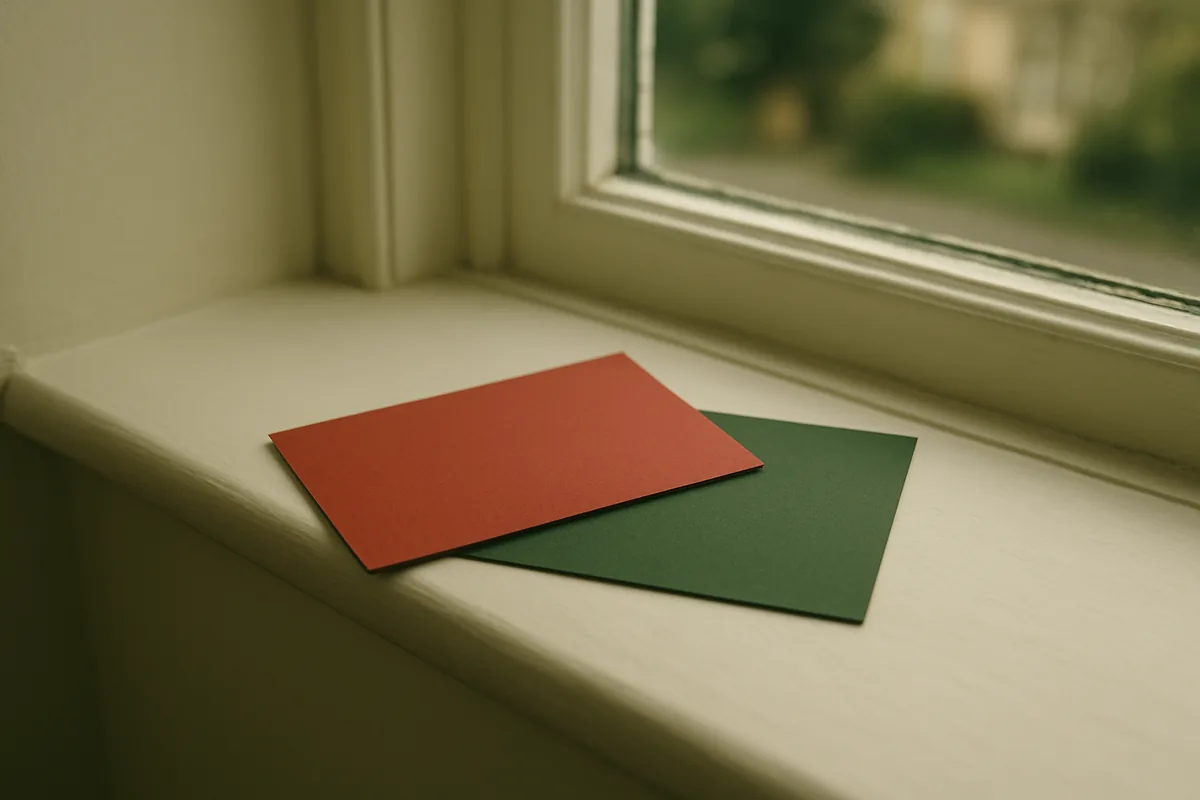
A window card is a simple visual signal, but it provides only a brief view of a situation. Whether someone notices it depends on visibility, timing and attention. A card also cannot explain why a signal is missing or what has changed inside the home. Comparing it with a phone call or an agreed check-in helps show what each method can—and cannot—tell you.
What a card cannot confirm
A card reports only what is visible from outside at the moment someone looks. A curtain, glare, a plant, a parked vehicle or a card that has slipped from view can hide it, even if the person is at home and well. A passerby may also fail to notice the window, especially after dark or while focused on another task.
A visible signal may still be misread. Someone might see a card but mistake its colour, overlook a detail or not know that it is part of a neighbour check-in system. Distance, tinted glass and changing daylight can make colours harder to distinguish.
Presence is not proof of a person’s condition: a card may remain visible after circumstances have changed, or be displayed without the person being able to respond. Absence is equally inconclusive. The card may have fallen, been moved, become obscured or simply gone unnoticed; it cannot establish why it is missing. Treat the view as one piece of information, not confirmation of what has happened inside.
Cards and direct check-ins compared
A visible card communicates at a glance, while a call or agreed check-in creates an opportunity for an exchange. The comparison below shows what each method can reveal and where uncertainty remains.
| Method | How it communicates | Follow-up it allows | What remains uncertain |
|---|---|---|---|
| Visible window card | A colour or symbol can be seen from outside the home. | A neighbour can look again or use another agreed contact method. | Whether anyone saw it, whether it is current, and why it is present or absent. |
| Direct phone call | A call rings a specific person’s phone; a conversation can provide a spoken reply. | The caller can ask a question, listen to the answer and try another agreed contact route. | A missed or unanswered call does not explain why the person did not answer. |
| Agreed check-in | People use a previously chosen contact and expected reply, such as a call or message. | The other person can follow the agreed next step if the expected reply does not arrive. | A missing reply may reflect a missed message, a device problem or another cause. |
A conversation can offer more detail than a card, but silence on a call or a missing reply still does not establish someone’s condition. No method guarantees that a neighbour will see or answer a signal, or confirms what is happening; each leaves some uncertainty.
Privacy, consent and alternatives
A window card can make a check-in easier to notice, but it also makes the arrangement visible to anyone who can see that window. The person taking part should decide whether a displayed signal feels comfortable and where it can be seen. Keep names, contact details and personal routines off the card itself. If a visible card does not suit the person, an agreed call, message or visit can provide a more private way to check in.
Consent and information on display
Ask the person directly whether they want to use a visible card; a neighbour, relative or volunteer should not make that choice for them. Seeing a card may tell passersby that someone has a regular check-in arrangement or may welcome support. A card that includes a name, phone number, appointment time or other note can disclose still more, so keep those details off the display. Let the person choose the window or other spot, and check that they are comfortable with who can see it from outside. They might prefer a card visible only from a neighbour’s path, rather than from the street or a shared hallway. Agree that they can move or stop displaying it whenever they wish, without having to explain. If their comfort changes after a few days, ask before changing the location or switching to another method. The arrangement works best when the person has control over both the information shown and the people who know about it.
Keep the arrangement discreet
Choose a position that the intended neighbour can see from an agreed approach, while avoiding a prominent street-facing window if that feels too exposed. A card set just inside a side window may be less noticeable to people passing the front door; check the view from outside before relying on that spot. Keep the card itself free of names, addresses, phone numbers and schedules. Share the signal’s meaning only with the people who need to respond, such as one designated neighbour and a named backup. Store spare cards inside the home rather than beside the window, where they could draw attention to the arrangement.
Use another agreed check-in
If displaying a card feels uncomfortable, agree on a private check-in that suits the person’s routine and access to a phone. A short call at a chosen time avoids a visible signal; a text message can work for someone who prefers not to speak or who uses messaging regularly. For a person who welcomes in-person contact, arrange a visit at a mutually convenient time rather than arriving without agreement. Consider practical preferences, including hearing, vision, dexterity and whether the person keeps a mobile phone nearby. Let the person choose the method and who contacts them, and revisit that choice if calls, messages or visits become inconvenient.